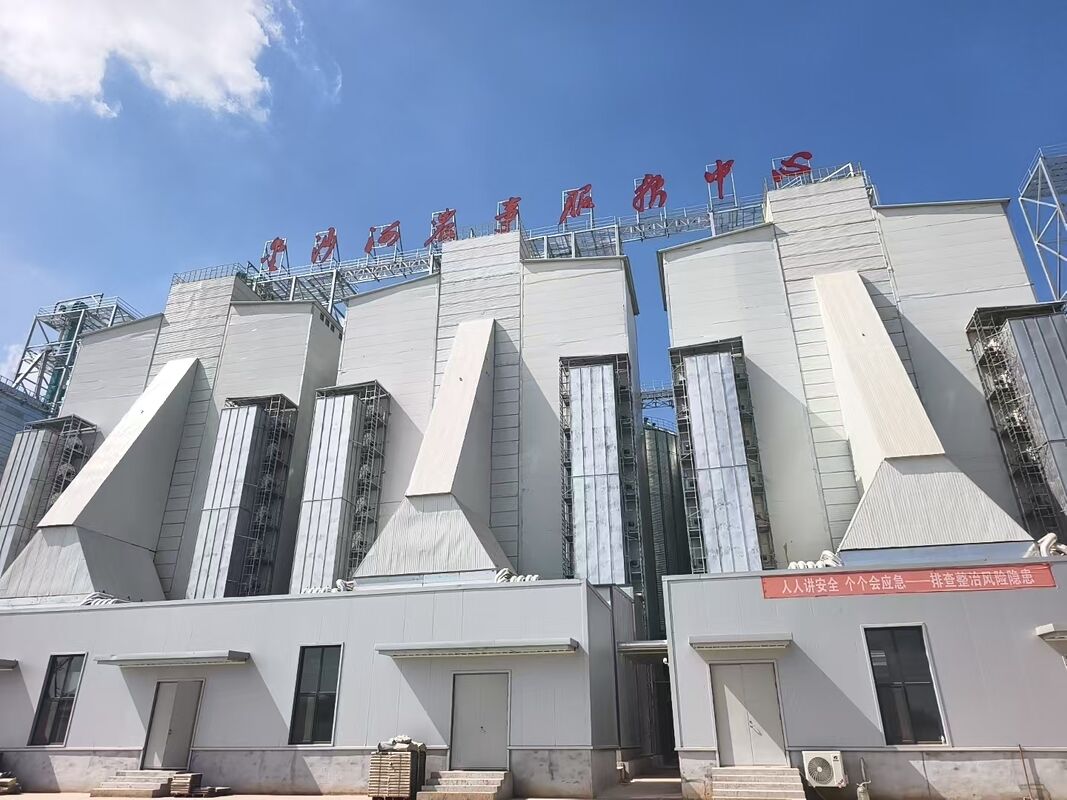
Highlight:
low-temperature grain drying heat pump
, corn dryer machine reduces emissions
, heat pump dryer reduces costs
Heat Source Type: |
Low-temperature Air-source Heat Pump (main Heat Source, Hot Air Circulation + Waste Heat Recovery) |
Drying Tower Type: |
Wangu Continuous Counter-flow Grain Drying Tower |
Applicable Grain Varieties: |
Corn, Wheat |
Drying Hot Air Range: |
Segmented Gradient Low-temperature Drying At 50~60℃ |
Environmental Features: |
No Flue Gas Emission From Combustion |
Safety Features: |
No Open Flame, No Risk Of Combustion And Explosion |
Moisture Reduction: |
From 30% To 15% |
Drying Process: |
26 Drying Stages; 3 Cooling Stages |
Heat pump low-temperature grain drying improves quality reduces emissions and drying costs.
Heat Pump Corn Drying Towers: Energy & Cost Advantage
1. Grain drying — a major energy and cost item in the grain chain
Corn is typically harvested at 24%–30% moisture and must be dried to a safe storage moisture to prevent spoilage and preserve quality. Removing that much water requires large amounts of heat, making drying one of the largest energy and cost items for grain depots and processors. Conventional coal-, gas- or electric-resistance heating is thermally inefficient and carries hidden costs such as stoking, ash handling and emissions control.
2. Why a heat pump saves energy: one unit of electricity, more than three units of heat
An air-source heat pump works on the reverse Carnot cycle. It uses a small amount of electricity to drive a compressor and “pump” low-grade heat from the air, raising its temperature before it enters the drying tower. Instead of converting electricity directly into heat, it moves heat, so its coefficient of performance (COP) is typically 3 or higher — every 1 kWh of electricity input can deliver more than 3 kWh of drying heat. A 2018 study in the Transactions of the Chinese Society of Agricultural Engineering measured corn drying costs of about RMB 0.038/kg with a heat pump versus RMB 0.049/kg with coal — a reduction of roughly 22.4% — with significantly lower pollutant emissions.
3. Operating cost comparison
The energy consumed per unit of heat and the hourly running cost vary by heat source. The table below (third-party vendor data) summarizes a typical comparison.
Table 1 Typical comparison of grain-drying heat sources
| Heat Source Type |
Energy |
Thermal Efficiency / EER |
Unit Energy Consumption |
Example Hourly Cost |
Safety |
Environmental Protection |
Equipment Lifespan |
| Heat pump drying tower |
Electricity |
~300% |
37 kW·h/h |
$5.2/h |
Safe and reliable |
Zero emissions |
10–15 years |
| Electric heating drying |
Electricity |
~95% |
107 kW·h/h |
$15/h |
Heating tubes prone to aging |
High power consumption |
5–8 years |
| Gas-fired boiler |
Natural gas |
~75% |
14 Nm³/h |
$8.5/h |
Risk of leakage / fire / explosion |
Medium impact |
6–9 years |
Note: figures depend on local electricity/gas/coal prices and equipment configuration; please calculate with local prices and your selected unit.
4. More than electricity: total-cost benefits
Lower grain loss, higher output quality
Low-temperature drying avoids scorching and stress cracking (kernel cracks), keeping color, smell and quality unchanged and raising the net grain yield.
Less labour, fewer failures
Coal-fired towers need constant attendance for stoking, coal feeding and ash removal and suffer heavy wear; heat-pump towers run automatically, unattended, with no open flame, fewer faults and easier maintenance.
Less working capital
Coal plants require bulk coal purchases months ahead; a heat-pump tower runs on electricity billed after use, freeing up cash flow.
Environmental compliance
No combustion means no flue gas or slag, aligning with tightening energy and environmental regulations and cutting emissions-control costs.
5. Payback assessment
The initial investment of a heat-pump tower is usually higher than a conventional boiler system, but savings come from multiple channels: lower running cost, reduced grain loss, less labour and lower working-capital lock-up. The longer the annual operating hours, the larger the throughput and the wider the energy price gap, the shorter the payback. For large-scale, long-season operations, the life-cycle cost of a heat-pump solution is often more favourable. A full investment analysis based on local electricity tariffs, throughput and drying days is recommended before purchase.
6. Summary
By moving heat efficiently instead of generating it, heat-pump corn drying towers cut operating costs and deliver broader benefits — lower grain loss, less labour, freed working capital and environmental compliance. As energy prices rise and regulations tighten, they are becoming the more economical and sustainable choice in grain drying.

 Your message must be between 20-3,000 characters!