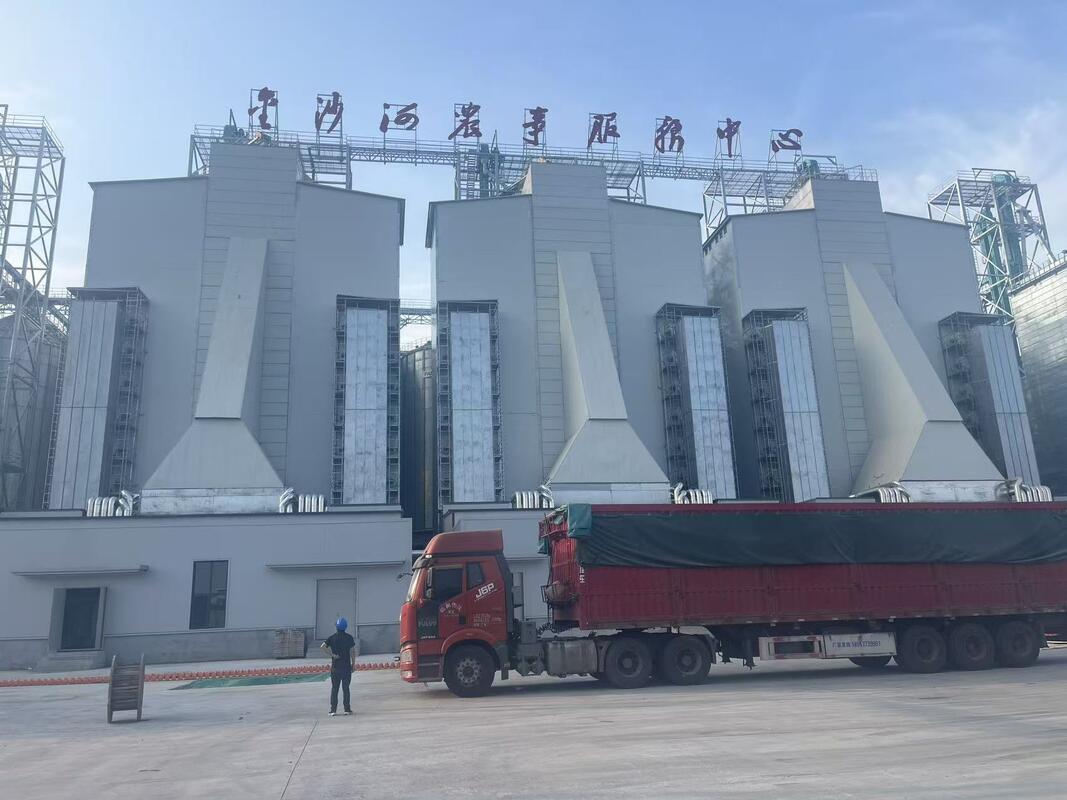
Highlight:
electric low temperature grain dryer
, full nutrition grain dryer machine
, zero emission grain dryer
Capacity: |
100~1500 T/d |
Heat Output: |
300,000~12,000,000 Kcal/h |
Moisture Reduction: |
5%~25% |
Hot-air Temperature: |
<75℃(adjustable) |
Grain Temperature At Outlet: |
≤45℃ |
COP: |
3.0~4.5 |
Heat Source & Emission: |
All-electric, No Combustion, No SOx/NOx, Low Dust |
Exhaust Treatment: |
Deduster + Cooler Heat Recovery |
Control: |
PLC Touch Screen + On-line Moisture + Mobile-app Monitoring |
Ambient Condition: |
-5 To +45℃ |
Certification: |
ISO9001 |
Crops: |
Paddy, Corn, Wheat, Soybean, Sorghum, Rapeseed, Coarse Grains |
Dry with electricity low temperature full nutrition zero combustion emission
The WGRB series air-source heat-pump grain drying tower is a clean drying plant whose only energy input is electricity. It burns no coal, no gas and no open flame: instead it "moves" the low-grade heat already present in the air into the drying system and delivers it to the tower; the exhaust air is not thrown away but is dedusted and then passed through a cooler that recovers the residual heat for reuse. Daily capacity ranges from 100 to 1,500 tonnes, heat output from 300,000 to 12,000,000 kcal/h, and moisture reduction per pass from 5% to 25%.
For overseas buyers this equipment solves three problems.First, grain can be dried where cheap fuel is unavailable or coal firing is prohibited. Second, heat-sensitive crops such as paddy and seed grain can be dried slowly below 75°C without quality loss. Third, environmental permitting, fire safety and dust emission approvals are far less demanding, so projects get off the ground more easily.
Working Principle: Where the Heat Comes From and Where It Goes
1,Heat absorption. The evaporator of the heat-pump unit absorbs low-grade heat from ambient air and evaporates the refrigerant into a low-pressure gas.
2,Temperature lift. The compressor raises the low-pressure gas to a high-temperature, high-pressure state, lifting the heat to a grade usable for grain drying.
3,Heat exchange. In the heat exchanger the hot refrigerant gives up its heat to circulating water; the heated water is delivered by a high-pressure pump to the heater of the drying tower, where it warms clean air. That clean hot air enters the grain bed in the tower.
4,Heat recovery. The hot, humid exhaust from the drying process is first cleaned in a dust collector, then passes through a cooler where its sensible and latent heat is recovered against a colder medium.
Because there is no combustion stage,the air entering the tower is clean hot air: no flue gas, no dust, no sulphur oxides and no nitrogen oxides.The kernel contacts nothing but clean, warm, humid air.
Main Features
1,All-electric, combustion-free: the plant runs on electricity alone — no boiler, no fuel storage yard, no chimney. With no open flame there is none of the furnace fire or deflagration risk associated with coal- or gas-fired towers.
2,Low-temperature drying, controllable below 75°C: heat-pump output is inherently gentle, which suits heat-sensitive crops — paddy, seed grain, premium food maize — and preserves protein, starch and germination rate far better.
3,Closed-loop heat recovery: exhaust air is dedusted and then stripped of its heat by a cooler, so the heat circulates inside the system instead of vanishing with the exhaust — the reason running cost can be pushed so low.
4,Fully automatic, one-key operation: PLC touch-screen control with automatic, interlocked regulation of hot-air temperature, discharge rate and on-line moisture measurement; the plant switches to discharge automatically at target moisture and can run unattended.
What It Really Delivers
1,Low drying cost: at a moisture reduction of 15%, drying costs less than RMB 0.02 per jin of dry grain — roughly RMB 40 (about US$5.6) per tonne. The figure moves with your local power tariff, but even where electricity is expensive, heat-pump COP typically ranges from 3.0 to 4.5: one kilowatt-hour of electricity brings in 3–4.5 kilowatt-hours of heat.
2,Better grain, better price: drying below 75°C means no thermal shock — fewer cracks, less breakage, normal colour. For paddy that is higher head-rice yield, for seed grain higher germination, for food maize better appearance and grade.
3,Smoother environmental approval: no open flame, no sulphur or nitrogen oxides, low dust emission — the environmental impact assessment is easier to pass, and in many regions grain-drying centres give priority subsidies to such clean-energy equipment.
4,Safer energy supply: the heat source is electric, with no diesel, coal or gas to transport and store, so fuel price swings and supply interruptions disappear; where the tariff is stable, running cost becomes almost exactly predictable.
Compared with Conventional Heat Sources
The table compares the four heat sources most often weighed in overseas projects, so you can judge by local conditions.
|
Item
|
Heat pump
|
Coal furnace
|
Gas furnace
|
Biomass
|
|
Hot-air temp.
|
<75℃
|
up to 300℃+
|
up to 300℃+
|
up to 300℃+
|
|
Emission
|
SOx/NOx none
|
SO₂,NOx high
|
NOx some NOx
|
dust, needs filter
|
|
Approval
|
easiest
|
banned in many areas
|
needs gas supply
|
moderate
|
|
Fuel supply
|
electricity only
|
oal logistics
|
pipeline or truck
|
pellet supply
|
|
Fire risk
|
none, lowest
|
high
|
medium
|
relatively high
|
|
Suited to
|
paddy & seed, sensitive areas
|
cheap coal where permitted
|
cheap gas with pipeline
|
biomass resources
|
Recommendation: heat pumps excel in quality-first and environment-first projects. Where coal or biomass is very cheap and permitted, a dual-source configuration — biomass for peak-season throughput, heat pump for quality — is also available.
Packing,Installation and Service
Packing and shipping: heat-pump modules, heat exchangers and the pump station ship in wooden cases and on pallets; the tower is split into section bundles, loaded into full containers or breakbulk. Packing drawings and container-split lists are issued before shipment.
Installation and commissioning: foundation and electrical drawings are provided; installation is guided by our engineer on site or entirely by video. Module positioning, water and electrical connection, evacuation and refrigerant charging, and loaded trial runs are confirmed item by item before handover.
Training and spares: English manual and operating videos are supplied; 1–2 operators and 1–2 electricians are trained. One season of wear parts ships with the machine, and common spares are available long-term at ex-works prices.

 Your message must be between 20-3,000 characters!